Tehran’s indication of a delay in the final peace agreement raises tensions.
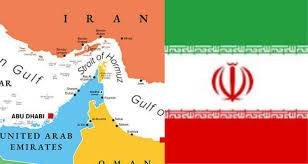
Iran stated on Saturday that the important Strait of Hormuz would not reopen unless the United States lifted its naval blockade on Iranian ports. A high-ranking official also said that a final peace accord was still “far” off.
In a speech on TV, Mohammad Bagher Ghalibaf, the speaker of the Iranian parliament, claimed that discussions with Washington had made “progress,” but there are still “many gaps” and “some fundamental points remain.”Ghalibaf, one of Tehran’s negotiators in the discussions to stop the war that Israel and the US started against the Islamic Republic, said, “We are still far from the final discussion.”
The ceasefire will end on Wednesday unless it is extended.
At the same time, US President Donald Trump claimed that “very good conversations” were taking on with Iran, but he told Tehran not to try to “blackmail” the US.
On Friday, Tehran said that the Strait of Hormuz, which usually carries a fifth of the world’s oil and liquefied natural gas, was open. This happened after a ceasefire was reached in Israel’s fight with Hezbollah, Iran’s partner in Lebanon.
This made markets around the world very happy and caused oil prices to fall, but Trump warned the embargo of Iranian ports would remain until a deal was reached to end the wider war. Tehran then claimed it was closing the strait again.Ghalibaf said, “If America doesn’t lift the blockade, traffic in the Strait of Hormuz will definitely be limited.”
Mojtaba Khamenei, Iran’s supreme leader, who hasn’t been seen since he took office, stated in a written statement that Iran’s navy is “ready” to beat the United States.
Trump told reporters at a White House event that Iran had been “a little cute” with its recent actions and warned Tehran not to try to “blackmail” Washington by changing its mind about the Strait of Hormuz.”We’re having very good talks,” the president said, adding that the US was “taking a tough stand.”
- “Targeted” –
Iran’s Revolutionary Guards said that anyone who tries to cross the strait without permission “will be seen as working with the enemy, and the ship will be targeted.”
Tracking data showed that a few oil and petrol tankers passed the strait early on Saturday during the short reopening. However, by late afternoon, tracking stations showed that very few vessels were traversing the canal.
The Revolutionary Guards shot at one tanker, according to a UK maritime security service. Vanguard Tech, a security intelligence company, said the military had threatened to “destroy” an empty cruise liner that was trying to leave the Gulf.
In a third case, the UK agency said it had a report of a ship “being hit by an unknown projectile which caused damage” to shipping containers but no fire.
The Indian foreign ministry said it had called in the Iranian ambassador in New Delhi to denounce a “shooting incident” that happened between two Indian-flagged ships in the strait.
- French peacekeeper in the UN slain –
Egypt, which has been working with Pakistan to mediate, seemed hopeful on Saturday. Foreign Minister Badr Abdelatty said that Cairo and Islamabad aimed to reach a final agreement “in the coming days.”
Iran’s stockpile of near-weapons-grade enriched uranium and the future of the Strait of Hormuz have been two main grounds of contention in the discussions.
On Friday, Trump said that Iran has agreed to give up its 440 or so kg of enriched uranium. “We’re going to get it by going in with Iran and a lot of excavators,” he stated.
Iran’s foreign ministry stated that the stockpile, which is assumed to be hidden deep beneath wreckage from US bombardment during last June’s 12-day battle, “was not going to be transferred anywhere” and that “surrendering it to the US has never been raised in negotiations.”
On February 28, the Middle East war began with a huge surprise attack by the US and Israel on Iran, even though the US and Iran were in talks at the time.
The war quickly extended throughout the area, with Iran attacking Gulf countries next door and Hezbollah firing missiles at Israel to bring Lebanon into the fight.
On Saturday, Hezbollah attacked UN forces in Lebanon, killing one French soldier and wounding three others. French President Emmanuel Macron blamed Hezbollah for the attack, but the group denied it.
Antonio Guterres, the Secretary-General of the UN, spoke out against the attack and claimed that the United Nations Interim Force in Lebanon (UNIFIL) has concluded that Hezbollah was responsible for it.