As Pakistan mediators, US-Iran negotiations are expected tomorrow: US media
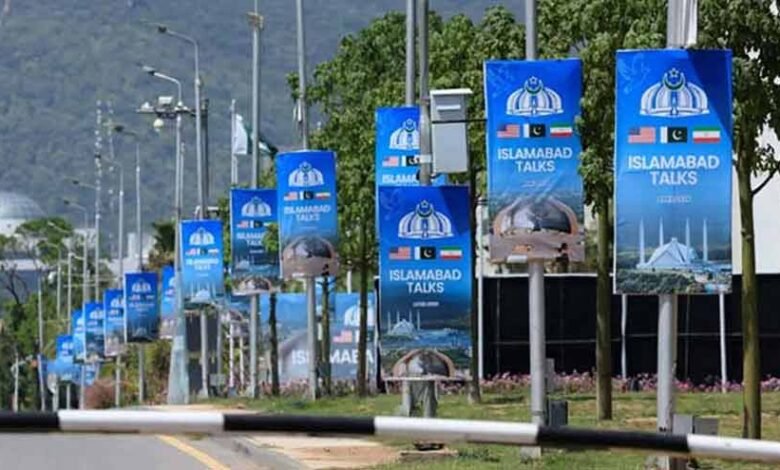
According to US media, the second round of talks between the US and Iran is scheduled for tomorrow in Islamabad.
US Vice President J.D. Vance is scheduled to leave for Pakistan today, according to American media reports, while the Iranian negotiation delegation is also anticipated to reach Islamabad.
In the meantime, President Donald Trump has declared that the Strait of Hormuz blockade will continue until a solution is struck, stressing that no pressure will be used to the United States and that any agreement will only be finished on the best conditions.
He went on to say that a fresh deal with Iran would be preferable to the one signed under previous President Barack Obama.
Trump said in a social media post that the agreement would ensure international peace, security, and stability and that the globe could be proud of it. He reaffirmed that Iran must be let to have nuclear weapons and proposed that prudent leadership may steer the nation in the direction of prosperity.
Also read: Iran peace negotiations’ future is questionable as the ceasefire’s expiration date draws near
He also asserted that the outcomes in Iran would be extraordinary, denouncing earlier accords made under Joe Biden and Barack Obama as detrimental to US security. Trump stated that he would not rush into a terrible deal and cautioned that the likelihood of war would increase in the absence of a settlement.
Additionally, the White House declared that President Trump would not force the US into another unfavorable agreement with Iran, insisting that any deal under his direction would guarantee peace and security for the US, Europe, Israel, and the Middle East.
Esmail Baghaei, a spokesman for Iran’s Foreign Ministry, voiced concerns, stating that although Pakistan has contributed positively to peace, Iran does not trust the United States. He also stated that the Iranian delegation will not visit Pakistan and that there is presently no plan to take part in the second round of negotiations.
In a separate call, Iranian Foreign Minister Abbas Araghchi and Deputy Prime Minister Ishaq Dar decided to step up peace efforts.
According to Iran’s Foreign Ministry, Araghchi stated that persistent ceasefire violations and provocative acts are significant barriers to the diplomatic process’s continuation.
He also emphasized conflicting and menacing remarks about Iran, as well as threats and involvement against Iranian commercial vessels, as significant obstacles in diplomacy.